

Roasting cocoa beans means heating fermented, dried beans, usually at about 250–300°F (120–150°C) for 15 to 40 minutes, to develop their chocolate aroma, drive off moisture and sharp acids, and loosen the shell. A lighter roast keeps more fruit and brightness; a darker roast gives deeper, toastier and more bitter notes.
Roasting is where cocoa finally starts to smell like chocolate. Everything before it, on the farm, builds the ingredients for that smell; the roaster turns them into flavor.
What happens to cocoa beans during roasting?
| Change | What happens | Why it matters |
|---|---|---|
| Flavor develops | Sugars and amino acids formed during fermentation react in the heat (the Maillard reaction) | Creates the hundreds of aroma compounds we recognize as chocolate |
| Moisture drops | From about 7% after drying to about 2% | Makes the nibs brittle and easy to grind |
| Acidity softens | Volatile acids left from fermentation evaporate | Removes vinegary sharpness and rounds the taste |
| Shell loosens | The shell dries and pulls away from the nib | Lets the beans be cracked and winnowed cleanly |
| Beans are made food-safe | Heat reduces the microbes that beans pick up on the farm | One of the key safety steps in cocoa processing |
The flavor building blocks come from fermentation, so a well-fermented bean roasts into a richer chocolate than one that was poorly fermented. Our guide to cocoa bean fermentation explains that first step.
How do light, medium and dark roasts taste?
| Roast | Typical flavor | Often used for |
|---|---|---|
| Light | Fruity, bright, floral, a little acidic | Fine-flavor beans, craft chocolate, natural cocoa |
| Medium | Balanced: clear chocolate with some fruit | Most cocoa powders and everyday chocolate |
| Dark | Deep, toasty, roasted-nut and bitter notes | Bulk beans, strong baking chocolate, mocha |
Fine-flavor beans such as Trinitario are usually roasted gently so their fruit notes survive; heavier roasts are often used to give bulk beans a stronger, more uniform taste. Read more about the variety in Trinitario cacao.
How do chocolate makers roast cocoa?
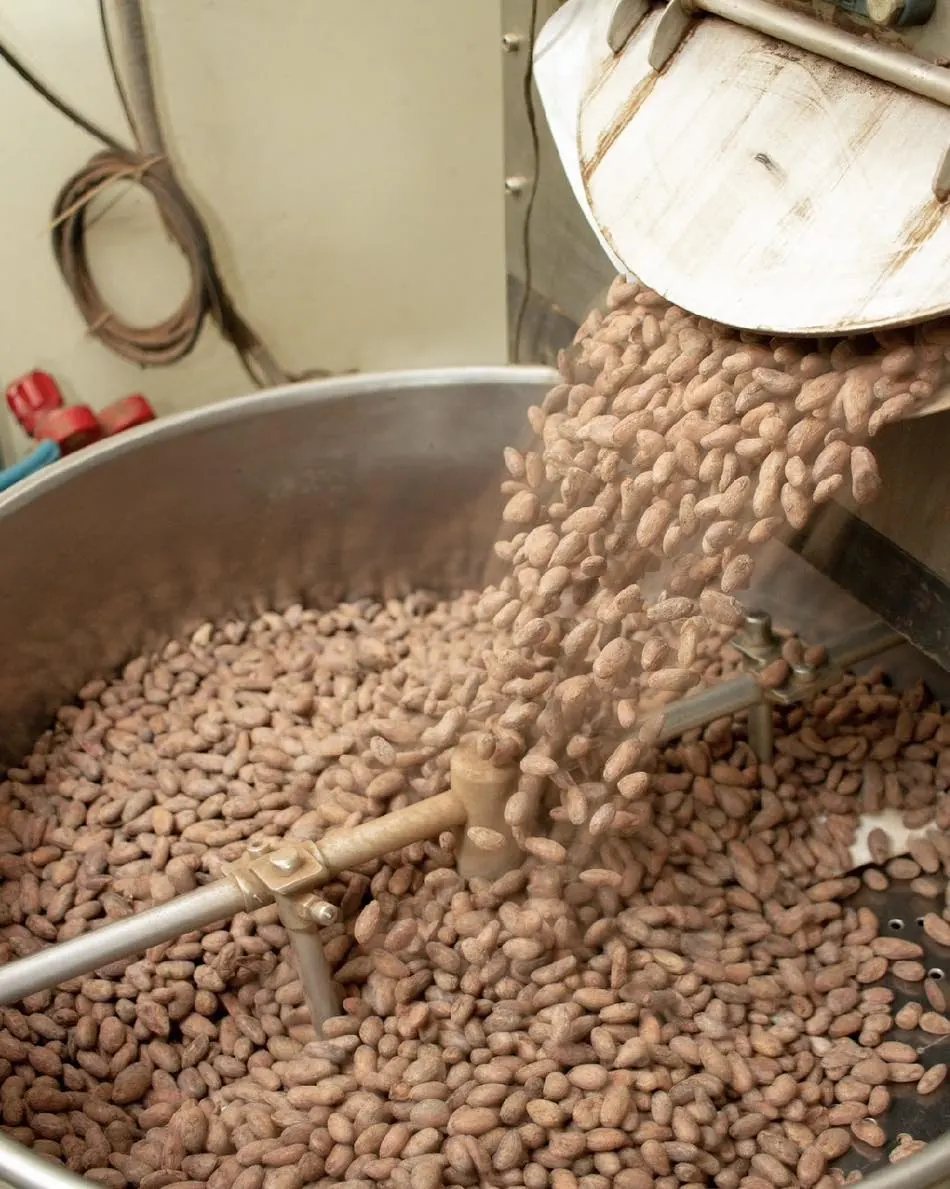
Most makers use a rotating drum roaster that tumbles the beans in hot air so they roast evenly. There are three common approaches:
- Whole-bean roasting: the classic method; the shell protects the nib and comes off easily afterward.
- Nib roasting: the beans are cracked and winnowed first, then the nibs are roasted, which gives a very even roast.
- Liquor roasting: the nibs are ground first and the cocoa liquor is heated, a method used in large factories.
After roasting, the beans are cooled quickly, cracked, and the light shells are blown away to leave cocoa nibs. Those nibs are ground into cocoa liquor, which becomes chocolate or is pressed into cocoa butter and cocoa powder; see cocoa butter vs cocoa powder.
Can you roast cocoa beans at home?
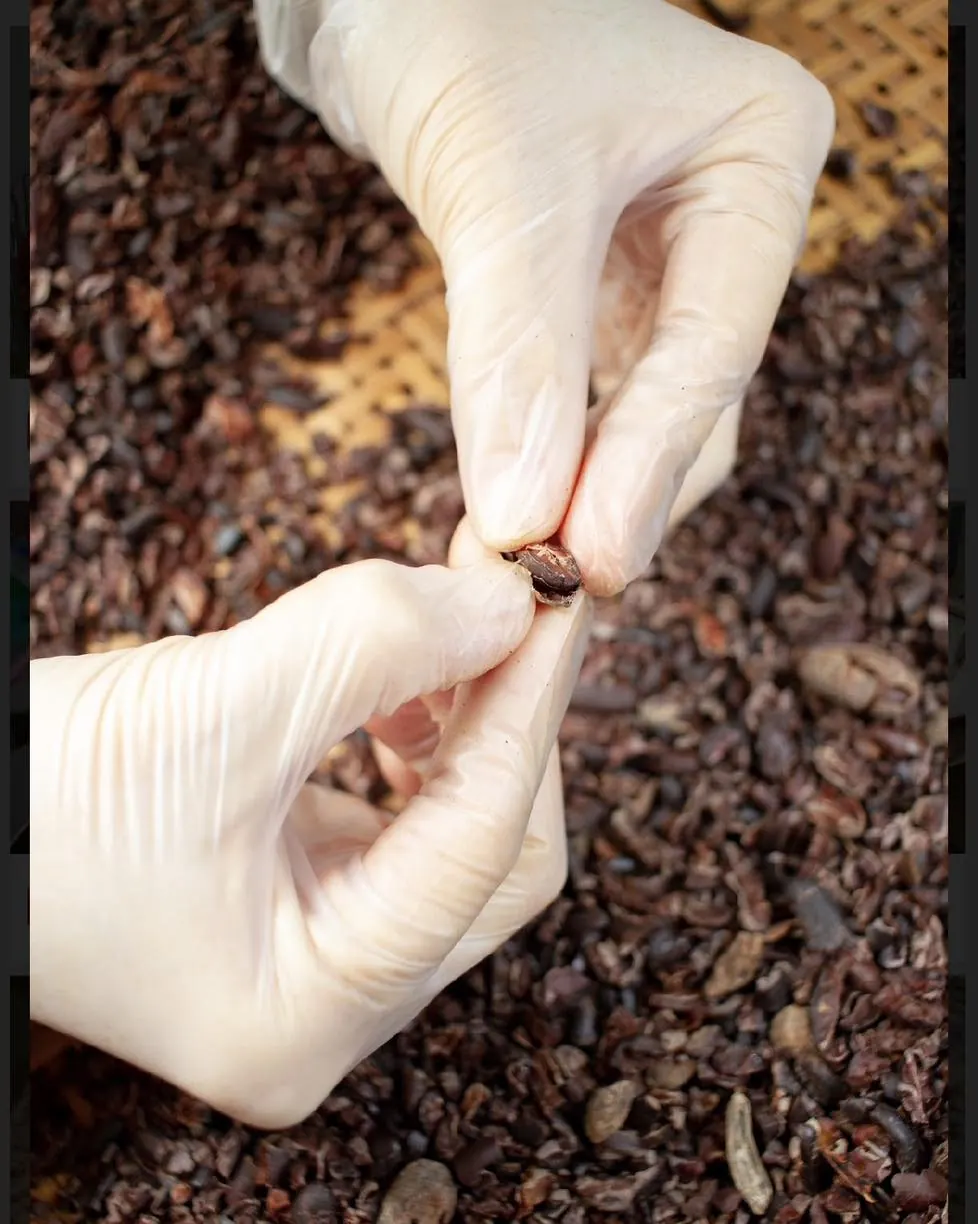
Yes, if you can find fermented, dried cocoa beans. A simple oven method:
- Heat the oven to about 300°F (150°C) and spread the beans in a single layer on a baking sheet.
- Roast for 15 to 30 minutes, stirring every 5 minutes. They are ready when they smell strongly of chocolate, the shells crack easily and a few beans pop.
- Cool them fully, then crack the shells by pressing the beans in a clean towel or with a rolling pin.
- Winnow: pour the cracked beans between two bowls in front of a fan or a hair dryer on cool, so the light shells blow away.
Start with a short test batch: smaller beans roast faster, and a few extra minutes can turn bright and fruity into bitter. Use the nibs in granola, cookies or on yogurt; our guide to cocoa powder vs cacao nibs shows how they differ in the kitchen.
How is the cocoa behind Grevista roasted?
Grevista cocoa powder starts with Trinitario beans from Đắk Lắk, Vietnam, fermented the traditional way in wooden boxes lined with banana leaves and dried in the sun. The producer, VNCACAO (Tbros), then gives them a minimal roast and grind, enough to bring out the chocolate aroma while keeping the bean’s natural fruity notes. The powder is natural and non-alkalized, with one ingredient. See sizes on the Grevista cocoa powder page.
To put this into practice when you shop, see our guide to the best cacao powder, which compares options by processing, flavor and published heavy-metal testing.
Frequently asked questions
Are cocoa beans roasted before making cocoa powder?
Yes, almost all cocoa powder is made from roasted beans. Roasting develops the chocolate flavor and helps make the beans safe to eat.
What temperature are cocoa beans roasted at?
Usually about 250–300°F (120–150°C) for 15 to 40 minutes, depending on the beans, their size and the flavor the maker wants.
What is the difference between roasted cocoa and cacao?
“Cacao” usually refers to the plant and its beans, and “cocoa” to the roasted products made from them. The names on labels are explained in cacao vs cocoa powder.
Why do roasted cocoa beans taste bitter?
Cocoa is naturally bitter from compounds such as theobromine, and a dark roast adds roasted, bitter notes. A lighter roast and well-fermented beans give a smoother, fruitier taste.
Written by the Grevista Editorial Team. Last updated October 22, 2026. How we check facts: Editorial Policy. Header photo: Mauro Cateb, CC BY-SA 4.0, via Wikimedia Commons.